Showing posts with label Festival & Culture. Show all posts

Thursday, March 1, 2018

तुझ संग होली


ख्वाबों में ही हरदम खेली तुझ संग मैनें होली |

कसक दिल में दबाए राज दिल की ना खोली |

छवि मन में तेरी ही बसी, किसी से ना बोली |

नही कोई रंग भाए मुझको ना ही रंगों की टोली |

मैं तो रंगना चाहूं सिर्फ़ तेरे ही रंग में ए हमजोली |

मैं ना जानूँ रंगो- गुलाल की भाषा और बोली |

मैनें प्यार से सजाया सिर्फ़ तेरी ही तो रंगोली |

बेरंग से लगते हैं मुझको ये सारे रंग-गुलाल, 

नीरस से लगते हैं शोर-शराबा और धमाल,

सामने आकर खेलो एक बार संग मेरे होली |

भींग के प्रेम रस में दोनो बन जाए दामन- चोली |


~Rani


Share & Comment Down Below.
Follow Us On Google Plus (G+).
And Also Make Sure To

Subscribe To Our Blog !!!


Tuesday, February 27, 2018

The logic behind holi is .....


Lets spread the color of peace and joy 
on this holi. 

The logic behind holi is that,

we should live more in understanding 
& agreement

with nature instead of attempting

to overwhelm it and making it 
our slave. 

Holi is an ideal opportunity 
to break the ice, 

restore relationships and 
reestablish connections, 

and to connect yourself with those
that you need and 

those hat need you with a touch 
of these shades.


~Rani jha


Share & Comment Down Below.
Follow Us On Google Plus (G+).
And Also Make Sure To

Subscribe To Our Blog !!!

Sunday, October 15, 2017

ऐसी हो अपनी दीवाली :)


सब मिल मंगल दीप जलाएं |

प्रेम की जगमग जोत जगाएं |


स्नेह की हर इक बाती सजाएं |
मानवता की किरण फैलाएं |

ऐसी अपनी दीवाली मनाएँ ||

अंतर्मन का मैल मिटाएं |
बैर-भाव की कालिमा हटाएं |

एक-दूजे को गले लगाएं |
इक नई सुबह जीवन में लाएं |

ऐसी अपनी दीवाली मनाएँ ||


By ~ Rani Jha


Share & Comment Down Below.
Follow Us On Google Plus (G+).
And Also Make Sure To

Subscribe To Our Blog !!!

Tuesday, August 1, 2017

Did you know this is how the Indian tradition Raksha Bandhan Origined......


Raksha Bandhan is celebrated as the day where a sister ties a thread around her brother's wrist as a symbol of protection while the he promises to protect and take care of her. What you might not know is how this tradition original. 


So here are some origin history of Raksha Bandhan:


- One of the oldest Mythological origin of Rakhi is from the story of Yama and Yamuna. According to a mythological tale, Yama, the lord of death, was blessed with eternity because his sister Yamuna tied up a Rakhi thread of blessings on his wrist that impressed the other gods of their love. Since that time the festival of Raksha Bandhan is associated with tying of Rakhi thread.


- Another Mythological Tale says that when Lord Indra was losing a war against demons, he was pushed back into the wilderness. After hearing that his wife Sachi yelled at the gods to help her protect her husband. Then the gods gave her a thread enchanted with mantras. Sachi then ran to Indra in the wilderness and tied it to Indra. The enchanted thread gave Indra powers to kill all the demons and win the battle.


Possible Historical Origins:


- One of the earliest observed thread tying occurred from the battle between Alexander the Greek king, and Porus, the Hindu king. Wife of Alexander sent a sacred thread to Porus, asking him not to harm her husband in battle. In accordance with Hindu traditions, Porus gave full respect to rakhi. In the battlefield, when Porus was about to deliver a final blow on Alexander, he saw the rakhi on his hand and restrained himself from attacking Alexander personally.


- Another occurrence happened when Queen Karmavati of Chittor had sent a Rakhi to Humayun to protect her from Bahadur Shah. Humayun, then engaged in an expedition against Bengal, turned back to carry out his sacred brotherly duty and tried to protect her but was too late. Chittor had already fallen and the Rani had immolated herself in the Rajput custom of Jauhar.


So hopefully you learnt something about the Hindu custom Raksha Bandhan famously known as Rakhi. 


- Rani Jha


Share & Comment Down Below.
Follow Us On Google Plus (G+).
And Also Make Sure To
Subscribe To Our Blog !!!

Saturday, March 11, 2017

खुशियों में भिंगो दो ये दुनिया सारी |


भर लो आज प्रेम रंग से पिचकारी
खुशियों में भिंगो दो ये दुनिया सारी |

रहे ना कोई भेद-भाव, और 
ना ही कोई भाषा बोली....

हो ऐसी ही प्यारी हम सब की होली |
भर लो आज प्रेम रंग से पिचकारी....


By: Rani Jha


Share & Comment Down Below.
Follow Us On Google Plus (G+).
And Also Make Sure To
Subscribe To Our Blog !!!

Wednesday, March 8, 2017

we cannot all succeed, when half of us are held back ...


we cannot all succeed when half of us are held back


Women themselves are the power and the men ought to just comprehend this as opposed to isolating them to display themselves as " Womens empower drive ".


International Women's Day is a day to appreciate ladies and their accomplishments. It is a sign of the many conflicts ladies faced and how they went far beyond expectations regardless of the obstacles. Ladies today involve important positions in all kinds of different backgrounds. They are not only making their commitment in all fields but also that they are testing the social standards and attempting to break the unfair limitations. 

In any case, it was a different story before. Ladies did not get the opportunity they do now. Many were not permitted to work and the rest were not even allowed to ask or even vote.


Here's how International Women's Day came about over the years:

1909: The day was actually seen in United States on February 28. The Socialist Part of America assigned the day to pay tribute and respect to the piece of clothing specialists' strike in New York in 1908. This was where ladies demanded for better pay and shorter working hours for the very first time.

1913-14: Women's day turned into a system to settle a war. Russian ladies watched their first International Women's Day on the most recent day of February to fight in World War I. Ladies in Europe held encourages on March 8 to express solidarity with peace activists.


1975: United Nations started praising the day on March 8.
          1975 was United Nations' International Women's Year.

2011: Former US President Barack Obama declared March as Women's History Month for USA to think about the many achievements of ladies and respect their part in molding a country's history.

The motto of International Women's Day 2017 is 'Be Bold for Change'. The day approaches individuals to work towards a superior working world - a non sexual abusive world. More matters to diversity and equality rather than sexism and unfairness.


Things might be a long way from perfect for ladies, yet there is trust and there is belief that some day there will be close to perfect equality.

In every part of the world ladies are doing work in all kinds of field, wether it's housewife, farming, social worker or even being a president. They are not given the same credit that would be given to men. Let's all come together and make one step forward towards this cause and help fight unfairness starting this very women's day. 


Things may be far from ideal for women but as long as people continue to fight for equality, there is hope and believe.


~ Rani Jha ~


Share & Comment Down Below.
Follow Us On Google Plus (G+).
And Also Make Sure To
Subscribe To Our Blog !!!


Monday, March 6, 2017

Fill The World With The 'Color Of Love'


Fill The World With The 'Color Of Love' 
'HOLI'


Holi is a Hindu festival that marks the arrival of spring. Known widely as the Festival of Colour, it takes place over two days, and is a celebration of fertility, colour, and love, as well as the triumph of good versus evil. Holi is an ancient celebration. It is celebrated for various reasons.


Holika Dahan takes place the night before Rangwali Holi. Wood and dung-cakes are burned in a symbolic pyare to signify good defeating evil, the burning of the devil Holika. 


The next morning, people gather in public spaces and take part in Rangwali Holi. The timing of Holi is synchronised with the moon, which means that the dates of each celebration varies year on year.


Holi festival draws on the legend of Radha and Krishna. Krishna loved Radha, but felt self-conscious about how different their skin-colours were. So on the advice of his mother, he went and playfully painted her face so it was the same colour as his.


An alternative legend of the holiday is associated with  Lord Shiva, one of the major hindu Gods. Madana, the God of love, decided to test his resolve and appeared to Shiva in the form of a beautiful Spirit. But Shiva recognized Madana and became very angry. In a fit of rage he shot fire out of his third eye and reduced her to ashes. This is sometimes given as the basis of Holi's bonfire.


It is said that lovers often celebrate Holi in this tradition, by coloring their faces the same color during the celebrations but it is mostly seen as a time for people to get together and enjoy themselves.


"Let's promise ourselves we will forget race, religion, nationality, gender, caste, and come together to fill the world with the 
'color of love' on this occasion. Only love should be spread and taken."


~ Rani jha ~


Share & Comment Down Below.
Follow Us On Google Plus (G+).
And Also Make Sure To
Subscribe To Our Blog !!!

Thursday, February 23, 2017

What is the reason behind celebrating Shivratri ?


What is the reason behind celebrating Shivratri ?

Different traditions believe in different significance of Maha Shivaratri. 


- One legend in the Shaivism tradition, this is the night when Shiva performs the heavenly dance of creation, preservation and destruction. The chanting of hymns, the reading of Shiva scriptures and the chorus of devotees joins this cosmic dance and remembers Shiva's presence everywhere.


- According to another legend, this is the night when Shiva and Parvati got married.


- A different legend states that the offering to Shiva icons such as the linga is an annual occasion to get over past sins if any, to restart on a virtuous path and thereby reach Mount Kailasha and liberation.


The significance of dance tradition to this festival has historical roots. The Maha Shivaratri has served as a historic confluence of artists for annual dance festivals. 
For ex: Major Hindu temples such as at Konark, Khajuraho, Pattadakal, Modhera and Chidambaram. This event is called Natyanjali, literally "worship through dance”.


~ Rani Jha


Share & Comment Down Below.
Follow Us On Google Plus (G+).
And Also Make Sure To

Subscribe To Our Blog !!!


Sunday, February 12, 2017

Do You Know The Reality Of Valentine Day? You Wont Believe At All !


Each year on February 14th, many people exchange cards, candy, gifts or flowers with their special “valentine.” The day of romance we call Valentine's Day is named for a Christian martyr and dates back to the 5th century, but has origins in the Roman holidays.


Valentine's Day is a holiday shrouded in mystery and legend. The origins of St. Valentine's Day lie in the ancient Roman fertility festival Lupercalia, which was celebrated on February 15. St. Valentine's Day began as all celebration of one or more early Christian saints named Valentines.


Many people today think of him as a cupid because he use to get couples married who wanted to do love marriage since it was prohibited in the early ages. Everyone celebrates valentines with their special one but history shows that this holiday was made for people who showed love for their friends through gifts and cards.

Conversation hearts, truffles galore and heart-shaped boxes of chocolates—these are the symbols of Valentine’s Day for many lovers around the world. This tradition of exchanging gift of chocolate boxes is much more recent then the history of valentines day itself but it has been going on for so long that it has become the way of celebrating valentines day.


~ Rani Jha 


Share & Comment Down Below.
Follow Us On Google Plus (G+).
And Also Make Sure To

Subscribe To Our Blog !!!


Wednesday, January 11, 2017

5 Facts You Probably Never Heard Of About Makar Sankranti !


1.) Firstly Why is Makar Sankranti Called Makar Sankranti?


On Makar Sankranti, the sun enters the sun-sign of Capricorn or Makara (the Indian rashi). Therefore the 'Makar' in the name. The word 'Sankranti' signifies the movement of the sun from one zodiac sign to another. Thus, the name of the festival literally means the movement of the sun into Capricorn.


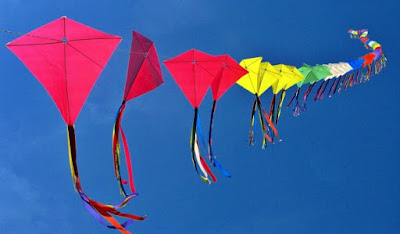
2.) Why do we celebrate the day by flying kites?


There is a very interesting reason behind the kite-flying. Kite-flying in olden days was generally done in the early hours of the morning, when the sun's rays were bright but not too harsh. It is believed during kite-flying, the human body was exposed to the sun for long hours. The early morning sun is considered beneficial for the skin and body. Since winter is also the time of a lot of infections and sickness, by basking in the sun, Hindus believed that the bad bacteria on their bodies would be cleared to a certain extent. Creating a fun way of sun basking where no one would even realise they were reaping benefits was through kite flying.


3.) Its almost always falls on the same date.


Most Hindu festivals follow the position of the moon and are based on the lunar calendar. Thus, the dates of festivals change every year because we follow the Gregorian calendar which is a solar calendar. But Makar Sankranti is a festival which falls on the same day every year as it follows the solar calender. However, once every eighty years, due to revolution of earth around sun and the shifts in the rotation of the earth, the day is postponed by one day. Makar Sankranti is celebrated on the 14th of January every year (sometimes on the 15th) for now. From 2050, it is predicted that the festival will fall on the 15th January (and occasionally on the 16th).


4.) It has more names then you have fingers.


Khichdi, Maghi, Uttarayan, Lohri, Poush Parbon, Makara Sankramana, Pongal (in Tamil Nadu and Sri Lanka) Maghe Sankranti (in Nepal), Songkran (in Thailand), Pi Ma Lao (in Laos), Thingyan (in Mayanmar) are some of the other popular names of this festival in different places.


5.) There's practically no difference in Thanksgiving and Makar Sankranti.


While Thanksgiving has become a “cool” festival, thanks to Hollywood movies and sitcoms, Makar Sankranti is still to make it in the pop culture. However, there is hardly much difference between the two festivals with both being celebration of harvest, a day to greet family and friends, share a meal together and exchange pleasantries.


By: Rani Jha


Share & Comment Down Below.
Follow Us On Google Plus (G+).
And Also Make Sure To
Subscribe To Our Blog !!!

Friday, December 23, 2016

You Wont Believe How Santa Claus Actually Originated.


Christmas is an annual festival commemorating the birth of Jesus Christ, observed most commonly on December 25 as a religious and cultural celebration among billions of people around the world.


The word “Christmas” means “Mass of Christ,” later shortened to “Christ-Mass.”
The even shorter form “Xmas” – first used in Europe in the 1500s – is derived from the Greek alphabet, in which X is the first letter of Christ’s name:  , therefore “X-Mass.” The 25th of December is celebrated as the birth date of Jesus Christ although the Bible does not mention Christmas or the 25th of December. Early Christians did not observe the birthday of Christ. Christmas as we know it became widely popular only in the 19th Century.


Christmas as we know it became widely popular only in the 19th Century.In Roman times, it became the celebrations honoring Saturnus (the harvest god) and Mithras (the ancient god of light), a form of sun worship that had come to Rome from Syria a century before with the cult of Sol Invictus. It announced that winter is not forever, that life continues, and an invitation to stay in good spirit.


In 1881, political visual artist Thomas Nast attracted on Moore's ballad to make the main resemblance that matches our cutting edge picture of Santa Claus. His toon, which showed up in Harper's Weekly, delineated Santa as a broad, chipper man with a full, white facial hair, holding a sack loaded down with toys for fortunate kids.


The figure of Father Christmas (Santa Claus) that we know today was introduced by artist Haddon Sundblom in advertisements for the Coca-Cola Company. In affect, the Coca-Cola Company has, over the decades, brought joy to millions of children around the world. A truly remarkable feat.


   Nicholas was a 4th-century Greek bishop of Myra, a city in the Roman province of Lycia, whose ruins are 3 kilometres (1.9 mi) from modern Demre in southwest Turkey. He was the real father of christmas that we know as Santa. Among other saintly attributes, he was noted for the care of children, generosity, and the giving of gifts. His feast day, December 6, came to be celebrated in many countries with the giving of gifts.


In the early USA his name was 'Kris Kringle'. Later, Dutch settlers in the USA took the old stories of St. Nicholas with them and Kris Kringle became 'Sinterklaas' or as we now say 'Santa Claus'!


Symbolic decorations of the tree! 

  Evergreen Tree :  The Evergreen is of course a symbol of everlasting life and light.

Blue and white represent snow and winter and red the blood of Jesus the Saviour. 

      Star : The Star represents the Star of Bethlehem that guided the Three Wise Men to the stable where Jesus was born.

 Bell : The Bell brings back the lost sheep into the fold. 

  Candle : The Candle represents Jesus as a Divine Light that every Christian should follow, the same light that led the Three Wise Men. 

   Gift Bow : The Gift Bow symbolizes any Christian’s commitment, bound to everlasting goodwill. 

  Candy Cane : The Candy Cane is the Good Shepherd‘s crook used to bring back the lost sheep. 

Wreath : The Wreath is the symbol of God’s Eternal Love.


~ Rani


Share & Comment Down Below.
Follow Us On Google Plus (G+).
And Also Make Sure To
Subscribe To Our Blog !!!